By the mid-1990s, TESTEX and RESEDA-BINDER were already working closely together. The company’s paraffin rings had by then been successfully certified to the OEKO-TEX® STANDARD 100. But 1996 marked a decisive turning point. Within the OEKO-TEX® Community, it was decided that chemicals did not fall within the scope of STANDARD 100 for textiles. Paraffin rings were reclassified as a chemical product and could therefore no longer be certified.
For RESEDA-BINDER, this meant a critical situation. Demand for certified safety was rising, yet the established certification was no longer available.
Jean-Pierre Haug, COO of TESTEX and initiator of the Ökopass/Eco-Passport, recalls:
“Paraffin rings were no longer regarded as accessories, but as chemicals. And STANDARD 100 does not permit the certification of chemicals. It was precisely for this client that we developed the Eco-Passport.”
A strong company meets new requirements
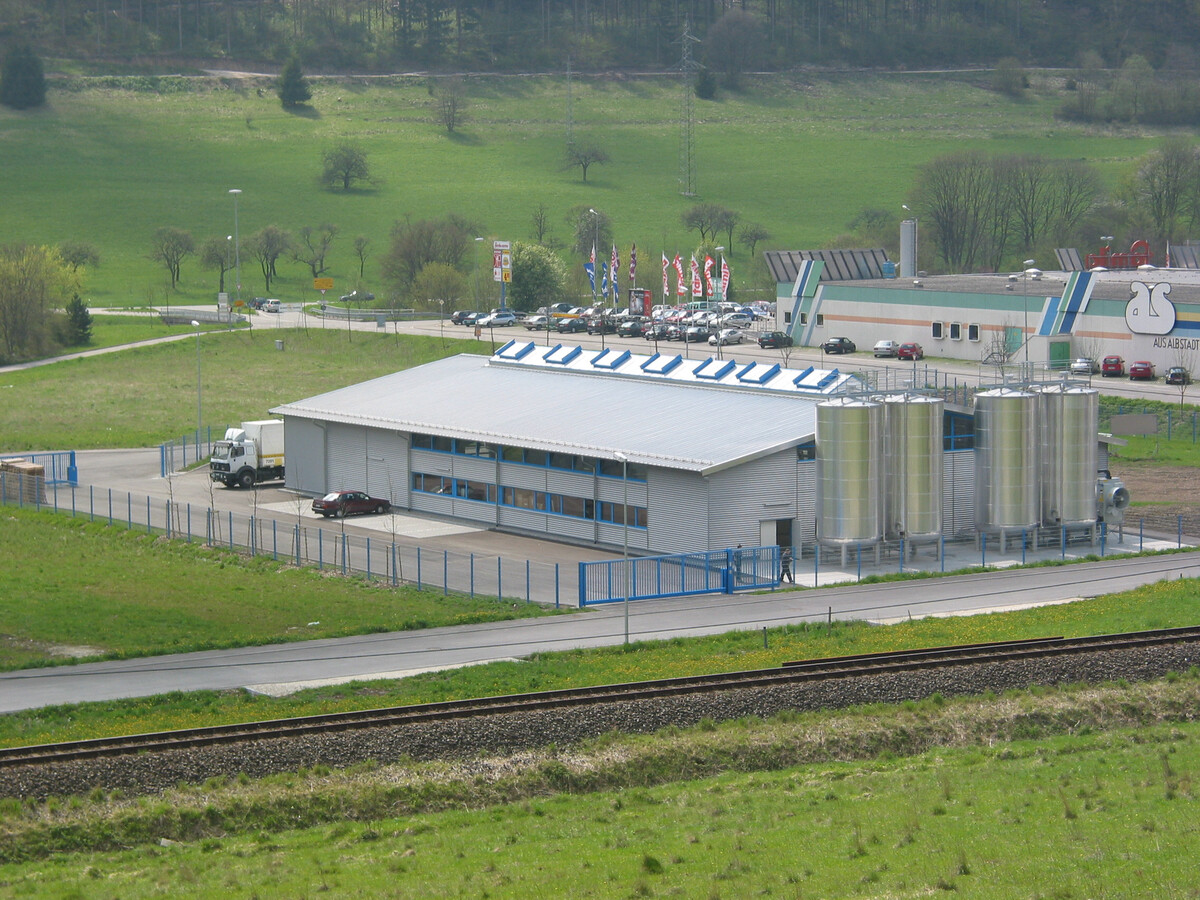
RESEDA-BINDER, founded in 1913 and now run by the fourth generation, has developed into the world’s leading manufacturer of paraffin rings through specialisation, innovative strength and a consistent focus on quality. With over 70 representatives worldwide and close partnerships throughout the textile value chain, the company stands for market proximity and continuous development.
The specially developed RESEDA-NATURAFIN paraffin rings meet the highest technical and ecological requirements and are free from substances harmful to humans and the environment.
However, with increasing demands for transparency and product safety, it became clear that new solutions were needed.
The challenge: safety without a suitable standard
“Our products could no longer be certified with OEKO-TEX®, yet at the same time our customers demanded precisely this proof.”
Michael Binder describes the specific market situation in these terms. The quality was there, but without certification, the objective basis for trust was lacking.
“Our customers were increasingly demanding concrete proof. It was no longer just about trust, but about verifiable safety.”
The pressure mounted, making it clear that a new system for assessing chemicals was necessary.
How TESTEX created the first Ökopass for RESEDA-BINDER
TESTEX recognised the systemic gap early on and subsequently developed a solution that had not existed in this form before. With the Ökopass, a system was created for the first time to assess chemicals according to the same principles as textile products. In doing so, a system was created for the first time that consistently applies the proven testing principles from textile certification to chemical products.
Jean-Pierre Haug explains:
“We applied exactly the same testing methods, limit values and principles as for STANDARD 100, only this time for chemicals.”
For RESEDA-BINDER, this was a decisive breakthrough.
“Suddenly, we were not only able to assure our customers that our products are safe, but also to prove this clearly and transparently. This has significantly strengthened our position in the market,” says Michael Binder.
The impact was immediate. The company was able to clearly differentiate itself and build trust throughout the supply chain.
“Especially in the sensitive field of chemicals, this confirmation was hugely important for our credibility.”
How Ökopass evolved into the OEKO-TEX ECO PASSPORT
What began with paraffin rings was quickly taken further. The concept was extended to other chemical auxiliaries and dyes and adopted by the first partners.
As early as the turn of the millennium, the approach was shared within the OEKO-TEX network.
“We also made the concept available to other institutes, which have also applied it,” explains Jean-Pierre Haug.
This step laid the foundation for international scaling: a global standard emerges
Around ten years ago, the Ökopass became the official OEKO-TEX® ECO PASSPORT.
Since then, all OEKO-TEX institutes worldwide have been able to certify chemicals, dyes and auxiliaries according to uniform criteria.
For RESEDA-BINDER, this step was of great significance.
“The transition was very professional. Without TESTEX, we as a medium-sized company would never have been able to take this path.”
Today, ECO PASSPORT is an established standard with global reach. Thousands of certificates and tens of thousands of tested products demonstrate the momentum of this development.
Why an ECO PASSPORT certificate matters today
For RESEDA-BINDER, ECO PASSPORT is now a central component of its market position.
“Certification is very important for us and our customers. It builds trust and simplifies many day-to-day processes.”
The benefits are concrete and tangible.
“We no longer have discussions about the safety of our products and have to fill in far fewer forms.”
There is also clear added value for customers.
“The difference compared to non-certified suppliers is immediately apparent. This makes decision-making easier and reduces risks.”
ShapeSafer Chemistry as a strategic factor.
The demands on the textile supply chain are constantly increasing. Sustainability and safe chemicals are key issues today.
“More and more companies see this as a top priority. Its importance is growing steadily,” says Michael Binder.
ECO PASSPORT is thus becoming a crucial tool for transparency, compliance and innovation.
The collaboration between TESTEX and RESEDA-BINDER goes far beyond certification.
“We have learnt a great deal through this collaboration and significantly expanded our understanding of chemicals. In some areas, this has also triggered a shift in thinking.”
The first certification remains a defining moment.
“That was a real milestone for us. And even today, every recertification is a moment of pride.”
Conclusion: An innovation with global impact
The history of the ECO PASSPORT shows how a concrete challenge can give rise to a solution of global relevance.
With the ECO PASSPORT, TESTEX has not only closed a gap but created a standard that today stands for safe chemicals in the textile industry worldwide.
An innovation born of partnership that continues to shape the industry to this day.