
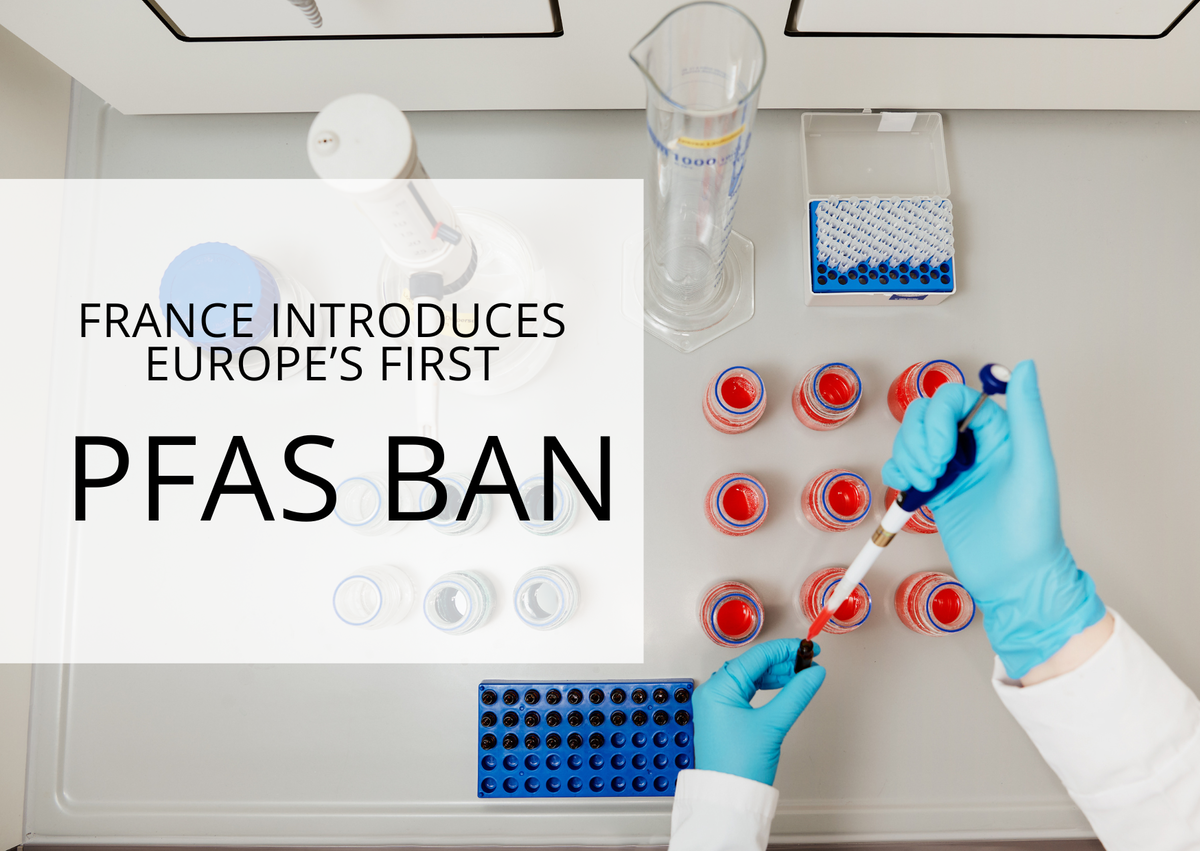
Why PFAS Are a Growing Compliance Issue
PFAS have long been used in textiles for their water- and stain-repellent properties. However, growing scientific evidence and public concern have led regulators to reassess their use.
For brands, manufacturers and suppliers, this means:
- Increasing regulatory pressure across key markets
- Growing demand for reliable data on chemical content
- Higher expectations from customers and business partners regarding chemical management
PFAS compliance is therefore no longer a niche issue, but a strategic consideration for companies operating globally.
France’s PFAS Ban: Key Elements
France’s regulation prohibits the manufacture, import, export and placing on the market of certain PFAS-containing products. From 1 January 2026, the ban applies to:
- Consumer textiles
- Footwear
- Cosmetics
- Ski waxes
Products manufactured before 1 January 2026 may continue to be placed on the market or exported during a 12-month sell-off period, until 31 December 2026.
Extension planned for 2030
France has already announced a broader restriction planned for 2030, which will extend the PFAS ban to all textiles, including:
- Furniture and upholstery textiles
- Automotive textiles
- Technical and functional textiles
Exceptions may apply only in cases where no suitable substitution is currently possible.
Residual concentration thresholds
The decree defines specific residual concentration limits beyond which products are considered non-compliant:
- 25 ppb for each individual PFAS (excluding polymers)
- 250 ppb for the sum of PFAS identified by targeted analysis (excluding polymers)
- 50 ppm for PFAS including polymers
These thresholds introduce concrete, measurable compliance requirements for the textile industry.
What This Means for the Textile Industry
Although the French ban is a national measure, it is widely seen as a precursor to broader European regulation. Companies supplying the European market should therefore view it as an early indicator of future requirements. In practical terms, this means companies need to:
- Identify where PFAS may be present in materials and finished products
- Assess compliance risks across global supply chains
- Prepare for stricter thresholds and broader product scopes
- Support due diligence and documentation requirements
Early preparation can help reduce regulatory and commercial risks and avoid disruptions to market access.
How TESTEX Helps Companies Navigate PFAS Regulations
As PFAS restrictions accelerate, companies need both short-term compliance solutions and long-term risk management strategies. TESTEX supports both.
1. PFAS Testing for Immediate Compliance (New Offer)
For brands selling in France, compliance cannot wait. TESTEX provides dedicated PFAS testing services to help companies:
- Check whether products meet French threshold levels
- Identify PFAS in materials and components
- Take corrective action in sourcing and finishing
- Preparation of official test reports for customers and authorities
- Support “Safe from PFAS” or “PFAS-tested” claims
This solution enables fast, data-driven decisions — essential for securing continued market access under the French decree.
2. OEKO-TEX® for Long-Term Chemical Management
OEKO-TEX® integrates PFAS-related requirements into its certification systems and supports:
- Transparency along global supply chains
- Continuous chemical management improvements
- Alignment with evolving regulatory standards
- Preparation for broader EU and international restrictions
If your OEKO-TEX® STANDARD 100 certification renewal takes place from January 2026 onwards, the updated requirements will be automatically applied.
If you hold a certification that remains valid into 2026 and you manufacture or sell products in France, additional certification steps may be required. In this case, please contact your local TESTEX branch to discuss the necessary next steps.
Looking Ahead
The French PFAS ban marks a turning point in chemical regulation for the textile industry. With further national and EU-level measures already under discussion, proactive PFAS management is becoming a key element of future-proof compliance strategies.
Companies that start assessing and managing PFAS risks today will be better positioned to meet future regulatory expectations and maintain trust with customers and regulators alike.